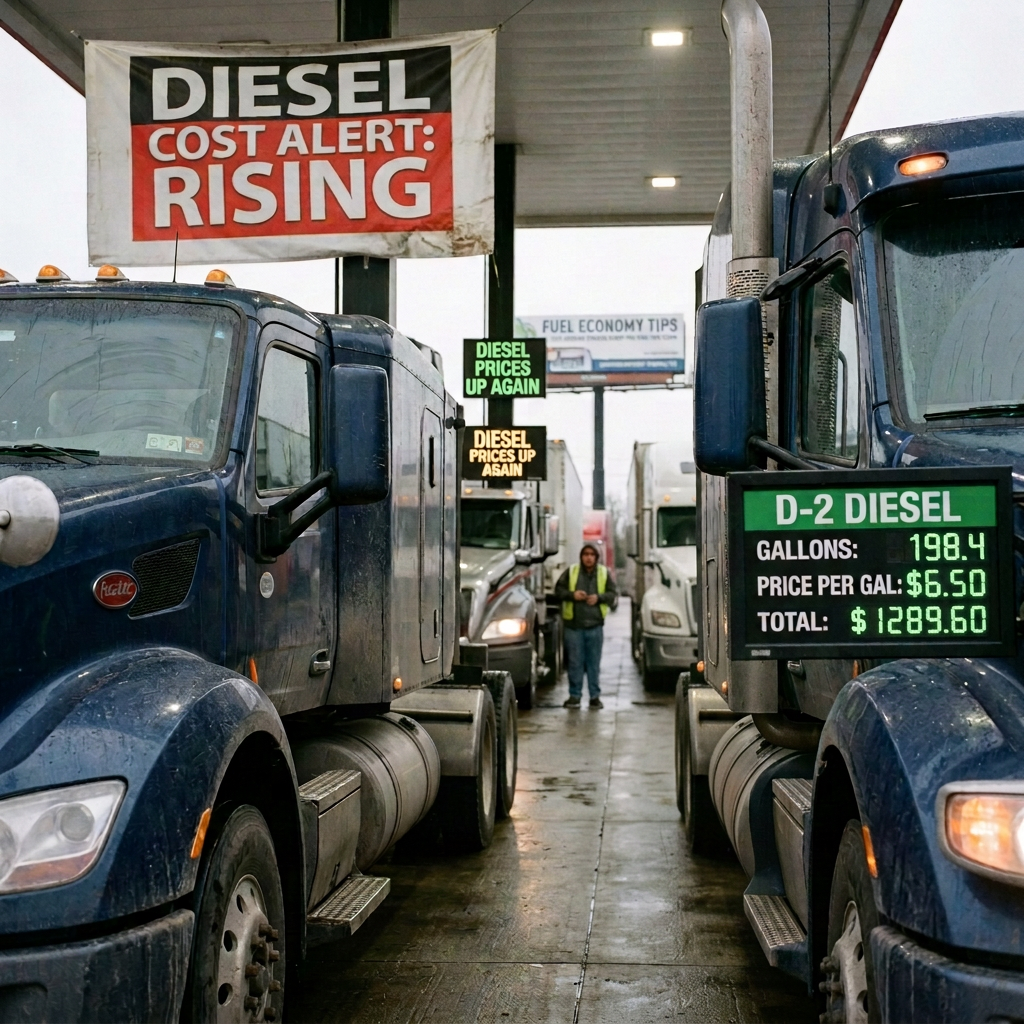
U.S. diesel set an all-time record of $6.529 a gallon in the week of September 21, 2026, according to the DOE/EIA weekly average. That beat the June 2022 peak of $5.810 by more than 70 cents. Prices eased to $6.382 on September 28, but that is still $2.63 above a year ago.
For shippers, the short-term pain is fuel surcharges. The bigger story is what it is pushing them toward: hauling more of their own freight, and taking a harder look at autonomous trucks.
Diesel has climbed for most of the year. It started 2026 at $3.477, jumped past $5 in March, dipped to $4.578 in early July, then rose steadily to the September peak. The 2026 average through September 28 is $5.010.
Surcharges are rising across every mode
Fuel surcharges are going up in trucking, LTL, rail, parcel and ocean, according to Intelligent Audit’s September 28 shipper brief. The increases come at the same time as general rate hikes:
- Old Dominion is raising select non-contract LTL tariff rates by 4.9% on October 5, even though freight volumes are soft.
- FedEx’s 2027 GRI averages 5.9% on packages. It also widens Remote Delivery Area surcharges by more than 70% and changes zones starting February 1.
Futures markets suggest some relief may be coming. But surcharge tables lag the pump price, so shippers will keep paying for September’s spike well into Q4.
Shippers are bringing freight in-house
According to an industry survey reported by the Journal of Commerce, 71% of shippers plan to expand their private fleets. Their reasons: more control over service, better customer delivery, and more leverage when for-hire capacity tightens and spot rates rise.
High fuel costs don’t make private fleets cheaper. A private fleet burns the same diesel. What changes is who controls the fuel strategy. In-house fleets can plan routes, cut empty miles, buy fuel in bulk and choose equipment, so their costs are easier to predict than paying carrier surcharges set by someone else.
Autonomy is the longer-term cost play
At its September 23 investor day in Dallas, Aurora Innovation set a target of 30,000 driverless trucks by 2030. Today it runs about 200, with more than 500,000 driverless miles logged since its commercial launch. CFO David Maday said the number “balances a top-down view of the market against customer demand.”
Aurora is also changing how it gets paid. Carriers will own the trucks, and Aurora will charge for the driver. That cuts Aurora’s revenue from about $2 a mile to 85 cents. In Maday’s words, the company is “focused on replacing the driver cost and not the overall cost.”
Carriers are still cautious. Daragh Mahon of Werner Enterprises said autonomy only becomes “really viable at scale.” He said the best returns come on long-haul lanes over 500 miles, where better uptime and fuel economy add up. That fuel-economy gain matters more when diesel costs $6 than when it costs $3.50.
What shippers should do now
- Audit your fuel surcharges. Check every carrier’s table against the weekly DOE index. Make sure the base price and step size in each contract match what you agreed to.
- Lock in Q4 rates where you can. GRIs and accessorial changes take effect in October and February. Negotiate before they land.
- Run the private-fleet math on your densest lanes. Short, repeating, high-volume lanes are the easiest to bring in-house.
- Watch autonomous pilots on long-haul lanes. Routes over 500 miles in the Sun Belt are where driverless capacity will show up first.
- Cut empty miles. Load consolidation, better routing and gateway changes save fuel whatever the price.
Sources
- DOE weekly diesel prices, 2026 and series history
- EIA weekly fuel update, Sept 28, 2026 – IndexBox
- IA Insights: The Shippers News Brief, Sept 28, 2026 – Intelligent Audit
- US shippers expanding private truck fleets – JOC
- Aurora plans 30,000 driverless trucks as carriers weigh cost – FreightWaves
- EIA Gasoline and Diesel Fuel Update