Truckload pricing power is back, and this week carriers said so out loud. Knight-Swift’s profit jumped more than tenfold, and its CEO said he expects to open 2027 bids with at least double-digit rate increases. Meanwhile, diesel rose again, and peak-season rules shifted across parcel and LTL. Finally, Stord made its biggest acquisition yet, while Amazon announced 300,000 holiday jobs.
Earnings and carriers
Knight-Swift. The largest U.S. truckload carrier reported Q3 net income of $118.3 million, up from $7.9 million a year ago. Revenue rose 14% to $2.2 billion. Most importantly, truckload revenue per mile, excluding fuel, rose 12.2%. CEO Adam Miller credited shrinking capacity rather than stronger demand. Looking ahead, he said Knight-Swift is “in a position to start with at least double-digit increases” in 2027 bids, which begin in November.
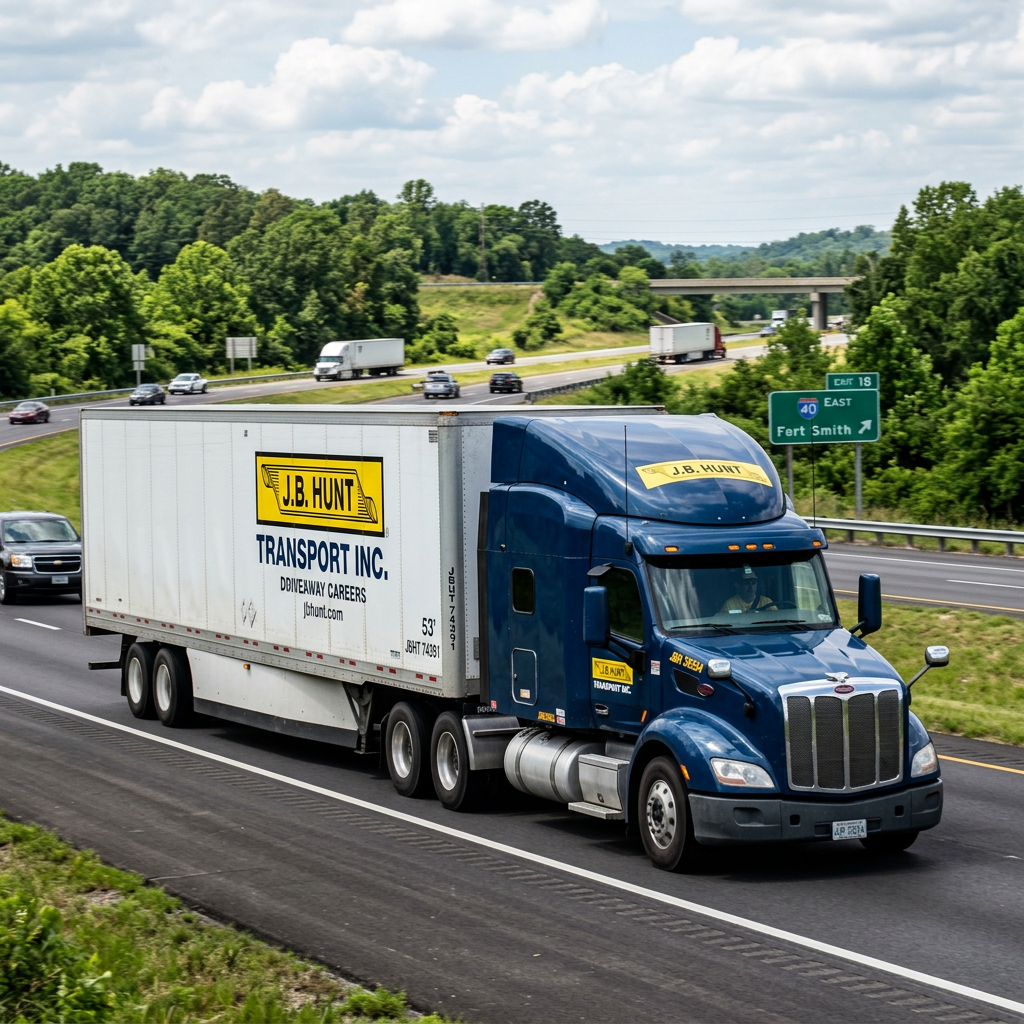
J.B. Hunt. Earlier, on October 15, J.B. Hunt reported revenue up 20% but flat profit, as driver, fuel and claims costs rose. Together, the two reports point to the same thing: carriers want higher rates in 2027.
Union Pacific. The railroad posted higher Q3 profit and revenue on volume growth, the Wall Street Journal reported. Notably, some freight is shifting from trucks to rail as trucking costs climb.
Tonnage. The ATA Truck Tonnage Index rose 0.8% in September but was flat from a year ago. Even so, “capacity is still contracting, which is leading to a better market for motor carriers,” said ATA chief economist Bob Costello.
Stord buys AMS Fulfillment. On October 21, Stord announced its largest acquisition to date. AMS handles more than 10 million orders a year for beauty, wellness and direct-to-consumer brands. In addition, it brings over 1 million square feet of warehouse space in Los Angeles, Salt Lake City and Philadelphia.
Rates, fuel and trade
Diesel. After two weeks of declines, the national average rose to $6.276 a gallon on October 19, up from $6.179 a week earlier. Not surprisingly, fuel is now the trucking industry’s top concern, according to the American Transportation Research Institute.
Truckload. Rates are holding at high levels, according to Transportation Insight. Although shipment volumes are slightly below last year, rejection rates remain high for van, reefer and flatbed. In particular, reefer and flatbed are tight.
LTL. Once again, the NMFTA’s proposed Mixed Commodity Rule failed in a member vote. Separately, TForce Freight and Central Transport moved to the standard 13-subscale classification system. As a result, shippers using either carrier should check NMFC codes on their next invoices.
Parcel. Amazon will not charge a volume-based peak surcharge for the second year in a row. By contrast, OnTrac added a $1 residential surcharge, and GOFO added its first emergency fuel surcharge. Meanwhile, Walmart approved eight more parcel carriers, including DoorDash, UniUni and TForce Final Mile, for seller-fulfilled orders. UPS’s 2027 rate increase is still expected any day.
Ocean. Inbound U.S. bookings are running about 20% above last year, the fastest pace since 2023. However, much of that reflects congestion and typhoon delays at Asian ports. On the bright side, higher water levels at the Panama Canal are allowing more transits.
Macro. September producer prices for transportation and warehousing rose 16% from a year earlier, while overall consumer inflation climbed to 3.7%. Still, retail sales rose 6.3% year over year, and e-commerce sales grew 8.2%.
Technology
Graypool. On October 19, HOPTEK relaunched as Graypool at the ATA’s Management Conference in Charlotte. Its AI software decides which loads a carrier accepts and how to price spot freight. Already, Werner, Prime, Hirschbach and Marten run on it, and it has booked $150 million in annualized spot freight.
Warehouse cybersecurity. Kaspersky found vulnerabilities in barcode scanners that could put warehouse operations at risk. Consequently, operators should check scanner firmware and network access.
Driverless trucks. The Wall Street Journal profiled Aurora’s driverless 18-wheelers this week. This follows the FMCSA’s five-year beacon exemption earlier this month, which removed a key rule blocking trucks with no one on board.
Freight fraud. In Santa Ana, California, thieves stole about $963,000 in trading cards from a FedEx truck. Likewise, analyst Adrian Gonzalez named freight fraud a top concern for 2027, urging stronger carrier vetting and real-time anomaly detection.
What shippers should watch next week
- 2027 bid season. Knight-Swift says bids start in November, with carriers seeking double-digit increases. Therefore, finalize your lane data and budget assumptions now.
- UPS 2027 rates. UPS is expected to announce its increase soon. For comparison, FedEx and DHL Express both set 5.9% averages.
- Parcel residential surcharges. These took effect October 24–26 at OnTrac, UPS and FedEx. Accordingly, check your first invoices for the new charges.
- Q3 GDP and inflation data. Both come out October 29 and will show how much higher fuel costs are slowing the economy.
- Holiday shipping deadlines. FedEx Ground’s last ship date is December 15–21, depending on transit time. In short, plan holiday cutoffs now.
Sources
- Knight-Swift Q3 2026: Truckload margins rebound on tight capacity – CCJ
- J.B. Hunt Q3 2026 earnings release – SEC Form 8-K
- Above the Fold: Supply Chain Logistics News, Oct 23, 2026 – Talking Logistics
- Transportation Industry Trends: Oct 19–23, 2026 – Transportation Insight
- ATA Truck Tonnage Index rose 0.8% in September – American Trucking Associations
- Stord acquires AMS Fulfillment – Stord
- Walmart approves 8 more parcel carriers – Supply Chain Dive
- DOE weekly diesel prices, 2026 – WeeklyDiesel
- HOPTEK is now Graypool – Benzinga
- Fuel prices emerge as trucking’s top concern – ATRI
- Amazon 2026 holiday hiring – Amazon