Why the Bill of Lading Is Different
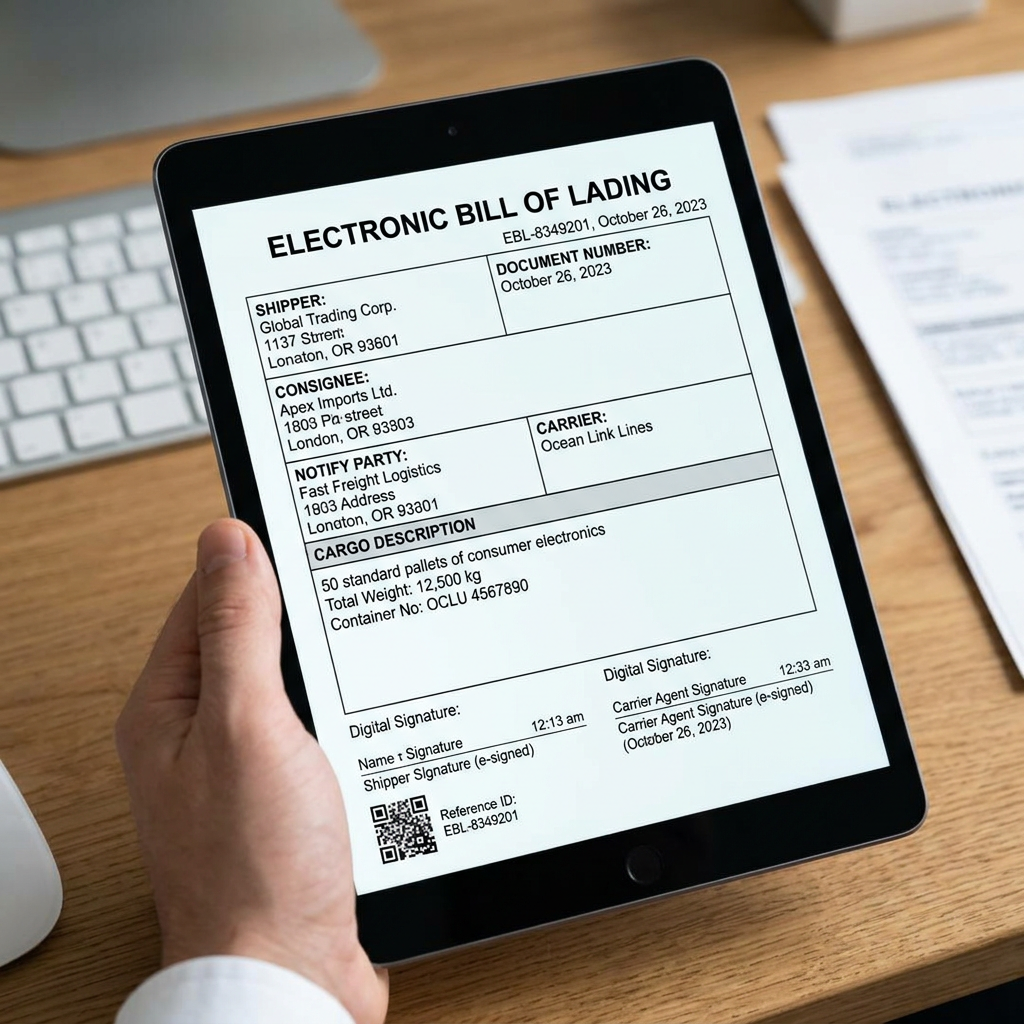
An electronic bill of lading (eBL) is the digital equivalent of a paper bill of lading, but its importance goes beyond eliminating paperwork. A bill of lading serves as a receipt for cargo, evidence of the contract of carriage, and—crucially—a document of title. Control of the document can represent the right to claim or transfer the goods.
That legal function explains why digitization stalled for decades. A PDF could copy information, but it could not reliably prove who controlled the original, prevent unauthorized duplication, or transfer possession with the same legal effect as paper. Modern systems address this through secure, auditable control mechanisms rather than simple electronic signatures.
The Legal and Commercial Shift
The legal foundation is strengthening. The UNCITRAL Model Law on Electronic Transferable Records (MLETR) recognizes electronic records that can be controlled and transferred, while the United Kingdom’s Electronic Trade Documents Act 2023 gives qualifying electronic trade documents legal recognition. Singapore and other jurisdictions have introduced related frameworks. Industry groups including the ICC Digital Standards Initiative and the Digital Container Shipping Association are also promoting common standards.
Carriers, banks, freight forwarders, and specialist platforms are now supporting eBL workflows. Adoption is still uneven, but the commercial case is becoming difficult to ignore: document delays that once consumed days can be removed, courier expenses disappear, fraud exposure is reduced, and structured data can flow more cleanly into a transportation management system.
The Obstacles That Remain
Paper has not vanished. Some banks, counterparties, insurers, and customs authorities still require it. Legal recognition also differs by jurisdiction, and platforms do not always interoperate smoothly. A shipper may be digitally ready yet remain dependent on a single paper-based participant.
Electronic Bill of Lading Readiness Checklist
Confirm the governing jurisdictions and applicable laws; identify carriers and trade partners that support eBLs; verify bank and insurer acceptance; select a platform with strong identity, control, audit, and interoperability features; map the eBL into the TMS and document workflows; define contingency procedures; and train staff before the first live shipment. The tipping point is not merely technological—it is contractual, legal, and operational.